
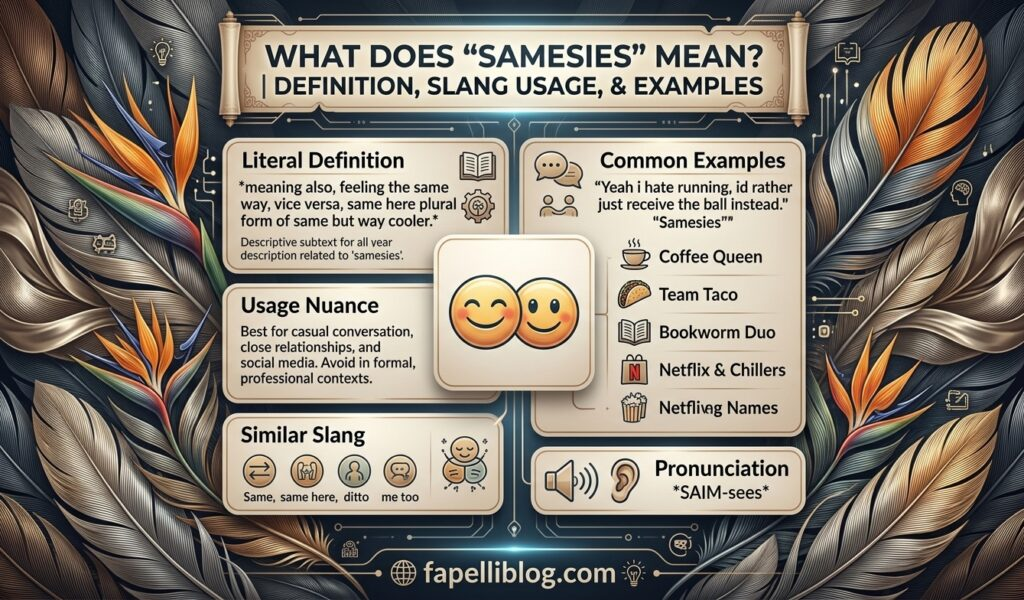
What Does Samesies Mean? Definition, Usage, and Examples in Everyday Conversation

Language keeps evolving, especially in casual conversations, text messages, and social media posts. One playful expression people use to show agreement or shared preferences is “samesies.” But what does samesies mean, and when is it appropriate to use it? Simply put, samesies is an informal expression that means “same here,” “me too,” or “I feel the same way.” It adds a friendly and lighthearted tone to everyday communication.
Understanding the Meaning of Samesies
Samesies is a casual way to tell someone that you share the same opinion, feeling, choice, or experience. Instead of repeating a complete sentence, you can simply say “samesies” to show that you agree with what another person has said.
For example, if a friend says, “I could eat pizza every day,” you might respond, “Samesies!” This short reply communicates that you enjoy pizza just as much.
The word is especially common in friendly conversations because it sounds playful rather than formal. People often use it with friends, family members, classmates, and online communities.
See also: Transportation Technology Explained
Where Did the Word Samesies Come From?
Samesies developed as a playful variation of the word “same.” English speakers frequently add informal endings to words to make them sound more expressive, humorous, or affectionate. In this case, the ending gives “same” a cheerful and conversational feeling.
Although it is not considered formal English, the expression has become familiar in casual speech, internet discussions, text messages, and social media comments. Its popularity reflects how people adapt language to communicate quickly while expressing personality.
There is no single situation in which the word must be used. Its meaning usually becomes clear from the conversation surrounding it.
How to Use Samesies in Everyday Conversations
Samesies works best when someone wants to show that they share another person’s thoughts or feelings. Here are some common situations where the expression fits naturally.
1. Sharing Similar Preferences
You can use samesies when you and another person enjoy the same things.
Example:
Person A: “Chocolate ice cream is my favorite.”
Person B: “Samesies! I love it too.”
In this conversation, the word creates a quick connection between the speakers.
2. Expressing Agreement
The expression can also communicate agreement with an opinion or statement.
Example:
Person A: “Mondays always feel too long.”
Person B: “Samesies.”
The reply means that the second person feels the same way.
3. Using Samesies in Text Messages
Text messaging is one of the easiest places to use this expression. It provides a short, friendly response without requiring a lengthy explanation.
For example:
Friend: “I am staying home and watching movies tonight.”
You: “Samesies! That sounds perfect.”
This response shows that both people have similar plans.
4. Commenting on Social Media
People may write “samesies” under posts, videos, or comments when they relate to someone’s experience.
For instance, someone might post, “Coffee is the only reason I can function before 9 a.m.” A follower could comment, “Samesies!”
The expression makes the interaction feel relaxed and relatable.
Samesies Examples You Can Use
Understanding a slang expression becomes easier when you see it in different contexts. Consider these everyday examples:
- Food: “I could eat tacos every day.” — “Samesies!”
- Sleep: “I need another three hours of sleep.” — “Samesies.”
- Music: “This is my favorite song.” — “Samesies, it is on my playlist.”
- Weather: “I love rainy afternoons.” — “Samesies!”
- School: “That assignment was difficult.” — “Samesies. I had trouble with it too.”
- Travel: “I want to visit Italy someday.” — “Samesies!”
- Entertainment: “I cannot stop watching this series.” — “Samesies, I am already on season three.”
These examples show that the word can express shared interests, agreement, and similar experiences.
Is Samesies the Same as Same Here or Me Too?
Samesies, “same here,” and “me too” communicate similar ideas, but their tones can differ.
“Me too” is a widely accepted expression that works in both casual and many neutral conversations. “Same here” is another natural way to communicate that you share someone’s experience or opinion.
Samesies is more playful and informal. It can make a conversation feel humorous, friendly, or slightly silly.
For example:
- “I love summer.” — “Me too!” (natural and neutral)
- “I love summer.” — “Same here!” (friendly and straightforward)
- “I love summer.” — “Samesies!” (playful and casual)
The best choice depends on your relationship with the other person and the tone you want to create.
Is Samesies Formal or Informal?
Samesies is informal slang. It is suitable for conversations with friends, casual online discussions, and relaxed text messages. However, it is generally not the best choice for academic essays, professional reports, business emails, or formal presentations.
In a professional setting, expressions such as “I agree,” “I feel the same way,” or “I share that opinion” usually sound more appropriate.
Understanding the difference between formal and informal language helps you communicate naturally without creating confusion.
Why Do People Use Samesies Online?
Online communication often favors short expressions that convey emotions and reactions quickly. Samesies allows people to show agreement without writing a full response. It can also create a sense of connection by showing that two people share the same interests, frustrations, or goals.
Because it sounds lighthearted, the word can make ordinary interactions feel more personal. However, its meaning still depends on context. In most situations, it simply indicates that the speaker feels the same way as someone else.
Final Thoughts
Samesies is a fun, informal expression that means “me too,” “same here,” or “I agree.” People use it in everyday conversations, text messages, and social media interactions to communicate shared feelings, preferences, and experiences.
If you want to expand your knowledge of everyday slang, understanding what does samesies mean can help you recognize the expression and use it naturally. Just remember that it is best suited to casual communication rather than formal or professional writing.