Meraki Gen 2 Explained: The 45-Setting Grinder, New Portafilters, and What Else Changed

Every successful product faces the same awkward question when a new version arrives. Is this a real improvement, or just a fresh coat of paint on the same machine? With espresso equipment, the answer is rarely found in the headline features alone. It is found in the daily details: how the grinder behaves when you switch beans, how the portafilter feels in your hand, and whether the changes solve problems that owners actually complained about. The second generation of this integrated system is interesting precisely because its headline changes are practical rather than decorative.
The 45-Setting Grinder: Precision You Can Actually Use
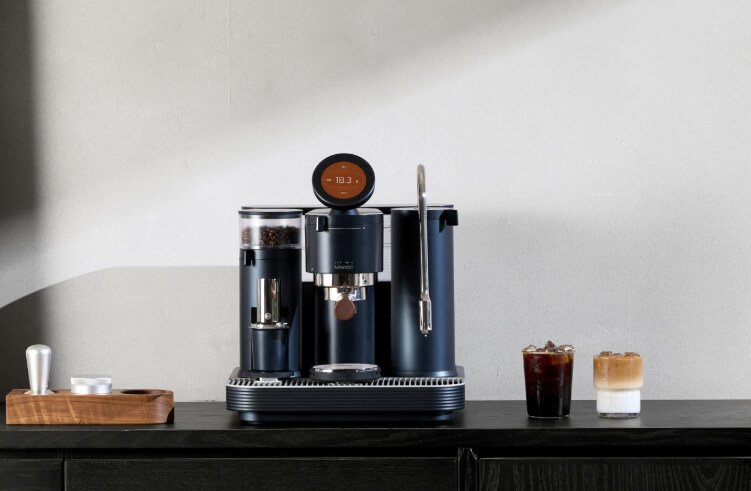
The most talked-about change is the grinder, now offering 45 settings. On paper, more settings sounds like marketing. In practice, it matters because espresso lives in very small adjustments. Move the grind one step too coarse and the shot runs fast and sour. Move it one step too fine and it chokes and turns bitter. A grinder with too few steps forces you to choose between those two bad outcomes, especially when you switch between a light roast and a dark roast.
Forty-five settings give you room to land in between. You can nudge the grind slightly finer for a bright, light-roast bean, then nudge it back for a chocolatey dark roast, without losing your place. That is useful not only for enthusiasts but for anyone who buys different beans from week to week. It also helps as a bag ages. Coffee changes over the days after opening, and a grinder that lets you compensate in small steps keeps the flavour steady for longer.
New Portafilters: A Small Part With a Big Job
Portafilters rarely get the attention they deserve. They are the handled baskets that hold the ground coffee during extraction, and they affect everything from how evenly water flows to how comfortable the machine feels to use. A portafilter that is awkward to lock in, hard to clean, or poorly balanced can quietly ruin the experience, even if the machine itself is excellent.
The new portafilters in the second generation are designed around that daily experience. They lock in more smoothly, distribute grounds more evenly, and are easier to keep clean. That may sound minor, but anyone who has struggled with a stiff portafilter first thing in the morning will understand why it matters. Espresso should feel like a ritual, not a wrestling match.
There is also a flavour angle. Even extraction depends on the coffee bed being level and consistent, and a well-designed portafilter helps you achieve that without extra tools or fuss. Combined with the finer grinder control, it means the shot is more likely to extract evenly, which shows up as sweetness and balance rather than a harsh or muddled finish. Small parts, in espresso, often make the biggest difference.
What Else Changed, and What Did Not
Beyond the grinder and portafilters, the second generation brings a series of refinements rather than a complete redesign. The brewing system has been tuned for more stable temperature, the workflow has been streamlined so there are fewer awkward steps between grinding and brewing, and the overall build feels more considered. None of these changes alone would justify an upgrade. Together, they make the machine feel more mature, as if the rough edges of the first version have been sanded down by real owner feedback.
Just as important is what did not change. The core idea remains the same: an integrated system where grinder, brewer, and scales work together, rather than a collection of separate parts. That continuity matters for existing owners: the second generation is an evolution, not a rejection of what came before.
That philosophy is best understood through the story of how the machine developed. You can read the full account of that evolution in meraki gen 2, which traces the changes from the first version to this one. It is a useful read if you want to separate genuine improvements from marketing, because it lays out what was changed and why, rather than simply claiming that everything is better.
The Awards Question: Does Recognition Matter?
New products often arrive with awards attached, and it is fair to ask whether those awards mean anything for your morning coffee. An award does not make a bad machine good, and it does not guarantee that a machine will suit your taste. What it can do is signal that independent reviewers found something genuinely noteworthy, whether that is design, innovation, or overall performance.
In this case, the second generation has attracted attention in the gadget press. You can find the details in Meraki Gen 2 news. Treat it as one data point among many, not a substitute for hands-on research.
Should You Upgrade, or Wait?
The practical question for most readers is simpler than the technical one. If you already own the first generation and are happy with it, the second generation is not a must-have upgrade. Your machine still makes excellent coffee, and the improvements, while real, are refinements rather than a revolution. You might appreciate the finer grinder control and the smoother portafilters, but you are unlikely to feel that your current coffee is suddenly inadequate.
If you are buying for the first time, however, the second generation is the obvious choice. You get the more precise grinder, the improved portafilters, and the refined workflow from day one, without paying a premium for features you do not need. The same logic applies if your current machine, whatever the brand, is frustrating you: if dialling in feels like guesswork, or if the daily routine feels clumsy, the improvements here address those exact frustrations.
The Bottom Line
The second generation is best understood as a machine that learned from its predecessor. The 45-setting grinder gives you finer, more repeatable control. The new portafilters make the daily ritual smoother and extraction more even. The smaller refinements add up to a machine that feels more polished and more reliable. None of that will transform a bad bean into a great cup, and none of it replaces the simple pleasure of tasting and adjusting. What it does is remove obstacles between you and a good cup, day after day. For a machine you will use every morning, that is exactly the kind of improvement worth paying attention to.