Cedar vs Heat-Treated Hemlock for a Barrel Sauna on a Budget

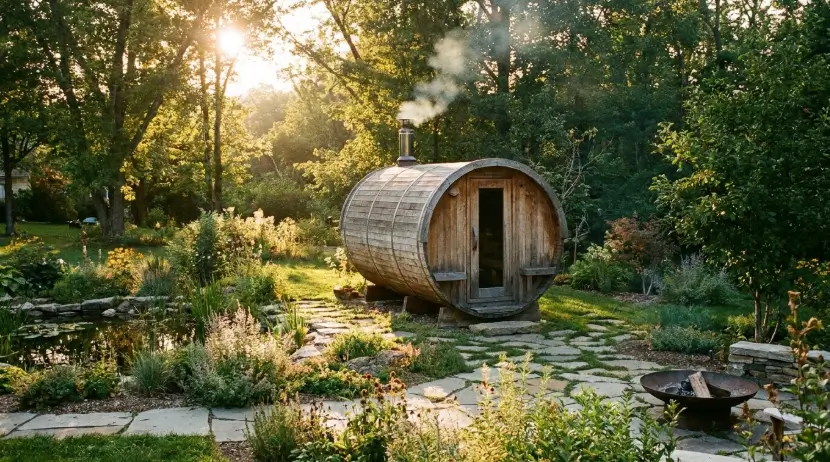
For a budget-focused barrel sauna buyer, heat-treated hemlock costs roughly 10 to 20 percent less than Western red cedar for the same size and stave thickness, while holding up nearly as well outdoors, since the heat-treating process reduces moisture content and boosts decay resistance. Cedar still wins on aroma, natural rot resistance without treatment, and long market track record. Neither wood is a wrong choice; the right one depends on whether the extra cost of cedar buys something the buyer actually values, or just a bit more brand recognition.
1. Upfront Cost
This is where the two woods diverge most clearly. A 6-foot barrel built from heat-treated hemlock commonly runs $200 to $500 less than the same size in Western red cedar, largely because cedar has to ship farther from its Pacific Northwest growing regions to reach most of the country, and demand for cedar in general construction keeps its price firmer. For a buyer trying to hit a hard number, hemlock is the more direct lever to pull without touching barrel size or heater rating.
2. Natural Decay Resistance
Untreated, cedar has a genuine natural advantage: its oils resist rot and insects without any additional processing. Hemlock does not have that natural property, which is exactly why barrel makers heat-treat it before use. The heat-treating process, essentially baking the wood at high temperature to alter its cell structure and drive out moisture, gives hemlock decay resistance that approaches cedar’s natural level for the purposes of an outdoor sauna. Cedar still edges ahead here, but the practical gap for a well-built barrel is smaller than the price difference suggests.
3. Aroma and Resin
Cedar’s scent is part of why many buyers want it specifically, a distinct, recognizable smell that heats up and fills the cabin during a session. Heat-treated hemlock has a much milder scent, closer to neutral than aromatic, since the heat-treating process removes much of the sap and volatile compounds that would otherwise carry aroma. Neither wood produces problematic resin buildup once properly kiln-dried, but cedar retains slightly more natural oil, which some users notice as a light sheen on warm boards during the hottest sessions. Buyers who specifically want the classic sauna smell should lean cedar; buyers indifferent to aroma save money with hemlock and lose nothing functional.
4. Weathering Outdoors Over Time
Both woods gray under UV exposure without a protective oil, cedar to a silvery patina, hemlock to a slightly duller gray tone. With an annual or biannual oil application, both hold their color reasonably well for years. Left completely untreated, cedar tends to weather more gracefully long-term because of its natural oils, while untreated hemlock can show more surface checking (small splits along the grain) after a few unprotected seasons. For a budget buyer planning to apply exterior oil regularly anyway, this difference matters less than it would for someone planning to skip maintenance entirely.
5. Structural Stability and Stave Fit
Barrel construction depends on staves holding a tight, consistent fit under hoop tension, and both woods perform well here when milled and dried correctly. Heat-treated hemlock’s reduced moisture content actually gives it slightly better dimensional stability in some conditions, meaning less shrink-swell movement across seasons, which can mean less frequent hoop tightening. Cedar’s natural stability is also strong, and the practical difference between the two on this point is minor enough that stave milling quality (tight tongue-and-groove tolerances) matters more than species choice.
6. Repair and Replacement Cost
If a single stave ever needs replacing, cedar replacement stock is more widely available since it is the more commonly stocked species among sauna parts suppliers, though it also costs more per board. Hemlock replacement parts can be harder to source from a smaller manufacturer, which is worth checking before buying: ask whether individual staves are sold separately and how quickly they ship, since a barrel with no replacement-parts option effectively locks a budget buyer into full-panel or full-barrel repairs if damage happens.
7. What Sellers Actually Offer
Availability varies by manufacturer, and comparing wood options across a few sellers, including sweatdecks.com, shows how pricing and stave thickness are specified (or left vague) for each species. A listing that names species, thickness, and drying method for both wood choices gives a buyer an actual apples-to-apples comparison; one that just says “premium wood” leaves the buyer guessing which species, if either, they are really paying for.
8. Interior Comfort Against Bare Skin
Bench surface matters more than most buyers expect before their first session. Both cedar and heat-treated hemlock stay relatively cool to sit on compared with denser hardwoods, since both are softwoods with lower thermal mass, but hemlock’s reduced moisture content from heat treatment can make it feel slightly drier and less prone to the faint tackiness cedar sometimes develops in a very humid session. Neither is uncomfortable when properly kiln-dried and sanded smooth; the difference shows up mainly for people who are especially sensitive to surface texture during long sessions.
9. Resale and Long-Term Value
Cedar’s stronger brand recognition can matter slightly if a barrel sauna is ever resold, since buyers shopping secondhand often specifically search for “cedar sauna” without knowing to look for heat-treated hemlock as an equivalent option. This is a minor factor compared with overall condition and heater working order, but it is worth knowing for anyone weighing resale value as part of the initial budget decision. A well-maintained hemlock barrel in excellent condition will still sell reasonably, just possibly to a slightly smaller pool of buyers who understand what they are looking at.
What Does the Health Research Say About Wood Choice?
The available sauna research does not distinguish outcomes by wood species, since studies track sauna use as a behavior, heat exposure, frequency, and duration, not the specific timber the cabin is built from. A 2018 review in Mayo Clinic Proceedings and a systematic review in Evidence-Based Complementary and Alternative Medicine both describe cardiovascular associations tied to regular use regardless of construction material. Wood choice affects cost, aroma, and upkeep, not the physiological experience of a properly heated session, so budget buyers can choose based on price and preference without any health trade-off either way.
Frequently Asked Questions
Is heat-treated hemlock actually cheaper than cedar? Yes, typically 10 to 20 percent less for the same barrel size and stave thickness. The gap varies by supplier and how far cedar has to ship.
Does heat-treated hemlock hold up as well outdoors as cedar? Reasonably well. The heat-treating process reduces moisture content and increases decay resistance, though most makers still recommend a protective exterior oil for both woods.
Which wood has less resin and odor? Heat-treated hemlock generally has a milder scent than cedar and produces very little resin, since the process drives out much of the wood’s natural sap.
Is cedar worth the extra cost for a first barrel sauna? Not necessarily. Heat-treated hemlock performs closely enough to cedar in durability that the extra cost of cedar is mostly about aroma and market familiarity.
References
- Cardiovascular and Other Health Benefits of Sauna Bathing: A Review of the Evidence, Mayo Clinic Proceedings, 2018
- Clinical Effects of Regular Dry Sauna Bathing: A Systematic Review, Evidence-Based Complementary and Alternative Medicine, 2018
- Effects of heat and cold on health, with special reference to Finnish sauna bathing, American Journal of Physiology, 2018
By Delia Hargrove