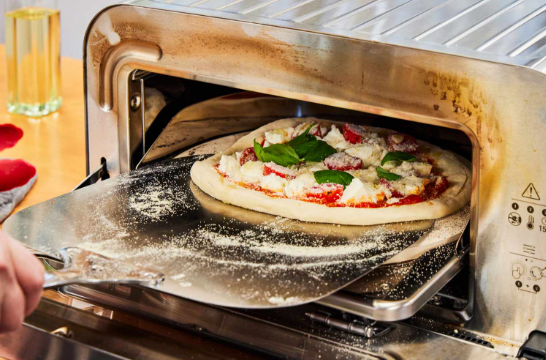
Countertop Pizza Makers: The Easiest Way to Bake Pizza Indoors

Not everyone has the backyard space, or the desire, to install a full outdoor cooking setup. For apartment dwellers, small-home owners, or anyone who simply wants great pizza without stepping outside, countertop pizza makers have become one of the most practical kitchen upgrades available. They deliver consistent results, take up minimal space, and remove nearly all the guesswork from home pizza-making.
This guide covers what makes countertop pizza makers such an easy entry point, how they compare to other oven types, and what to look for when choosing one for your kitchen.
Why Countertop Pizza Makers Have Become So Popular
Traditional home ovens were never really designed for pizza. They struggle to reach the high temperatures needed for a properly crisp crust, and even when they get close, heat distribution is often uneven. Countertop pizza makers solve this problem by using compact, high-efficiency heating elements that reach much higher temperatures in a fraction of the time.
Add in the fact that they require no installation, no venting, and minimal counter space, and it’s easy to see why they’ve become a go-to solution for home cooks who want restaurant-quality results without a full renovation.
See also: Why Continuous Learning Leads to Better Career Opportunities
The Convenience of an Indoor Pizza Oven
For anyone cooking primarily inside, an indoor pizza oven offers one of the simplest ways to upgrade pizza night. These countertop models plug directly into a standard outlet, heat up quickly, and maintain consistent temperatures without any manual fuel management.
Key advantages include:
- Quick setup – No installation, gas lines, or ventilation required
- Consistent heat – Even cooking without hot spots or flare-ups
- Compact footprint – Fits easily on most kitchen counters
- Beginner-friendly – Simple controls with minimal learning curve
For everyday use, especially in smaller kitchens or apartments, this style of oven removes nearly every barrier that typically comes with home pizza-making.
What About Flexibility? Multi-Fuel Options
While countertop electric models are ideal for indoor convenience, some home cooks want more flexibility to experiment with different cooking styles. That’s where a multi-fuel pizza oven comes in. These ovens allow you to switch between fuel sources like wood, charcoal, or gas depending on the flavor and cooking style you’re after.
Multi-fuel ovens are better suited for outdoor use, but they’re worth mentioning here because many households eventually pair an indoor countertop oven for daily convenience with a multi-fuel outdoor oven for weekend cooking sessions. Together, they cover both ends of the spectrum: quick weekday meals and more involved weekend cooking projects.
What to Look for When Choosing a Countertop Pizza Maker
Not all countertop ovens perform the same. A few factors make a meaningful difference in day-to-day use:
- Maximum temperature – Look for models that reach at least 700°F for a properly crisp crust.
- Heating element design – Dual top-and-bottom heating typically produces more even results.
- Interior size – Make sure it comfortably fits the pizza sizes you typically make.
- Ease of cleaning – Removable stones or trays make maintenance significantly easier.
- Preheat time – Faster preheating means less waiting between pizzas.
Taking a few minutes to compare these specs before buying can make a noticeable difference in long-term satisfaction.
A Simple Weeknight Pizza Routine
One of the biggest advantages of countertop pizza makers is how easily they fit into a regular routine. A simple weeknight process might look like this:
- Preheat the oven while prepping dough and toppings (5-10 minutes).
- Assemble your pizza on a floured pizza peel.
- Slide it directly onto the preheated stone.
- Cook for 2-5 minutes depending on thickness and toppings.
- Rotate halfway through for even browning, if needed.
Compared to a traditional oven, which can take 20+ minutes just to preheat, this entire process is often faster from start to finish.
Maintenance Tips for Longevity
Countertop pizza makers are low-maintenance by design, but a few habits help extend their lifespan:
- Let the stone cool completely before cleaning to avoid cracking.
- Wipe down the exterior after each use to prevent grease buildup.
- Avoid using metal utensils directly on the cooking stone.
- Store in a dry area if not used daily to protect internal components.
Final Thoughts
Countertop pizza makers offer one of the easiest ways to enjoy consistently great pizza without leaving your kitchen. An indoor pizza oven is ideal for those who want fast, fuss-free results on a daily basis, while a multi-fuel pizza oven remains a great complementary option for those who also enjoy more hands-on outdoor cooking. Together, they give home cooks flexibility across both convenience and experimentation.
FAQ
1. How hot do countertop pizza makers get?
Most quality models reach between 700-800°F, which is hot enough to produce a crisp, well-cooked crust in just a few minutes.
2. Are countertop pizza ovens difficult to clean?
Not usually. Most feature removable stones or trays, and regular wiping after each use keeps them in good condition with minimal effort.
3. Can a countertop pizza maker replace a full-size oven?
For pizza specifically, yes, it often outperforms a standard oven. However, it’s designed specifically for pizza and flatbreads, not general baking.
4. Is a multi-fuel pizza oven better than an electric countertop model?
It depends on the use case. Multi-fuel ovens offer more flavor variety and are suited for outdoor use, while electric countertop models are better for quick, indoor convenience.
5. How long does it take to cook a pizza in a countertop oven?
Most pizzas cook in 2-5 minutes once the oven is fully preheated, much faster than a traditional home oven.