Understanding the GPA Scale: From Letter Grades to Grade Points

Every student encounters the GPA scale at some point, but surprisingly few actually understand how it works behind the scenes. Report cards show letter grades, yet colleges, scholarships, and transcripts almost always talk in terms of GPA points instead. Knowing exactly how letter grades translate into numerical values takes a lot of the mystery out of your own academic record, and makes it much easier to track your progress toward the grades you’re aiming for.
How the GPA Scale Actually Works
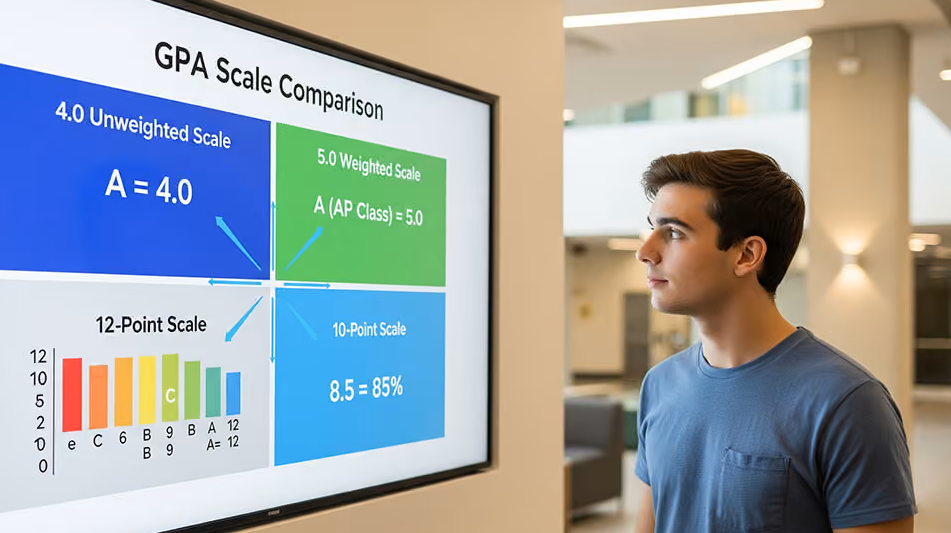
The standard GPA scale runs from 0.0 to 4.0, with each letter grade assigned a corresponding point value. An A typically sits at 4.0, a B at 3.0, a C at 2.0, and so on down the line, with plus and minus grades adjusting the value slightly up or down within each letter range. Once individual grades are converted to points, they’re averaged across all your classes to produce your overall GPA. This system exists so that schools, colleges, and employers can compare academic performance using one consistent number instead of comparing letter grades from different grading systems.
Where the A+ Fits In
One of the most common points of confusion on the GPA scale is the A plus grade, since not every school treats it the same way. Some schools cap it at the same 4.0 as a regular A, while others award it a value of 4.3 or higher to reflect truly exceptional performance. This inconsistency is exactly why it helps to look up how your specific school or district handles it, rather than assuming every A+ carries the same weight everywhere.
If you’ve ever found yourself wondering what is an A+ actually worth on your transcript, checking a detailed GPA scale breakdown is the fastest way to get a clear answer. These references typically lay out every letter grade side by side with its corresponding point value, making it easy to see exactly where an A+, A, A-, and every other grade falls on the overall scale.
Why the Scale Isn’t Always the Same Everywhere
It’s worth remembering that GPA scales can vary between schools, districts, and even countries. Some institutions use a simplified scale without plus or minus distinctions, while others build out a more detailed scale with smaller increments between each letter grade. This is one of the main reasons colleges often recalculate GPA using their own standardized formula when reviewing applications, since it allows them to fairly compare students coming from very different grading systems.
See also: Best Water Retention Tablets UK: A Pharmacist’s Guide to Water Weight Loss
Turning GPA Knowledge Into a Plan
Once you understand exactly how your grades translate into GPA points, it becomes much easier to set realistic academic goals. You can calculate exactly how much a single grade will move your overall average, which makes decisions like whether to retake a class or push for extra credit far more strategic. And if you’re looking to strengthen your academic record further through additional learning opportunities, exploring options like CASA Courses can be a good way to build extra skills or qualifications alongside your regular coursework.
Final Thoughts
The GPA scale might seem like a small detail, but understanding exactly how it works gives you a much clearer picture of your academic standing. Once you know how each letter grade translates into points, tracking your progress and setting realistic goals becomes a lot more straightforward.